Two bags, a full row, and the key lying on the driver's seat
You can see it through the glass. It is on the driver's seat, or in the cup holder, or in the door pocket where it slid off your lap when you got out. The bags are in your hands, the row is full in both directions, and somebody is waiting behind you with a turn signal on because they think you are leaving. The lot at the shopping center off the freeway does this several times a week, and so do the office and warehouse lots out at McCarthy Ranch.
The first minute is always the same: walk the car and try all four doors and the tailgate, because one of them is unlocked more often than you would think. Then look at whether a window is down a finger's width. Then stop, because everything after that either costs money or costs paint.
What makes this a local problem rather than a universal one is the second half of it. In most towns the answer is that somebody brings the other key. Here the other key is at a house nobody is in, or in a bag in a car on the far side of where the freeways meet, and the person holding it cannot get to you inside an hour. That is the thing worth working out before you start waiting.
Why the car did that, and why it will not change its mind
Most cars in this lot open by proximity: the key stays in a pocket, the handle senses it, the door unlocks. The convenience has a failure mode built into it, which is that the car cannot tell the difference between a key in your pocket and a key on the seat eighteen inches away. Plenty of them will lock themselves after a few minutes or after being walked away from, and some will lock when the tailgate closes.
So the car is not faulted and nothing in it is going to time out and let you in. Pressing a handle repeatedly will not change the answer, and neither will the door handle on the far side. If the car has a phone app tied to it and you are signed in, that is genuinely the fastest route and it is worth thirty seconds of trying before anything else, including this trade. A fair number of calls end politely at that point.
One thing that does time out is your patience with the lot. On a weekend afternoon the row you are in gets tighter rather than looser, and a technician arriving into a full aisle needs somewhere to stand beside your driver's door. Where you are parked changes the visit more than what you drive does.
Three routes, and the honest cost of each
Route one, the spare key. Free, and the whole question is who can bring it. If somebody is home and ten minutes away, this is the right answer and no further reading is required. If the spare is in an empty house and the household is across the interchange until seven, then this route is an hour and a half with a full trunk of groceries, and it is worth saying that out loud rather than hoping.
Route two, roadside assistance through an insurance policy, a credit card benefit or the manufacturer's own program. Often included in something you already pay for, which makes it the cheapest paid option, and the trade-off is the wait: the job gets dispatched to whoever is available in the area, and the window you are given is a window rather than a time. Worth checking if the afternoon is not urgent.
Route three, calling a locksmith directly. A car lockout is $106 to $199, with the $89 service call counted inside that figure rather than added afterward. Arrival across the city averages 18 minutes from the base near Main Street, and the lots nearest the freeway are at the short end of that: the Transit Area 14, Midtown 13, McCarthy Ranch 24 out at the business park. An arrival between 8pm and midnight carries $48 and one between midnight and 7am carries $86, said on the phone before anyone drives. Ninety days on the labor.
How the opening is actually done, and what gets checked first
Identification comes first, and it comes before any tool: photo identification plus the registration or insurance for the car, matched against the plate on the bumper. It takes a minute in a busy lot and it is the part of the trade worth insisting on. Anybody willing to open a car in a shopping center lot without looking at a document is a problem for every other car in that lot too.
The opening itself is done at the top edge of the glass. A pair of wedges makes a few millimeters of room at the corner of the window, a long reach tool goes in past the weather seal, and the interior handle or the lock button is worked from inside. It is patient rather than forceful, most of it happens in under ten minutes, and the point of doing it slowly is that the seal, the glass and the paint are all in the same condition afterward.
What is not done is the flat steel bar down the window channel that people remember from decades ago. On a modern door that channel is full of wiring, motors, side airbag components and the linkage itself, and a bar in there turns a lockout into a repair bill. If somebody suggests it, that is the moment to end the conversation. Damage also moves the job off the lockout figure entirely, and there is no version of that which is cheaper.
When the key is not locked in but gone
This is the other half of the calls from this lot and it is a different job. A key that went into a shopping bag and then into a trash can, a key that fell out of a pocket in a food court, a key that has simply stopped talking to the car. Nothing in the car is locked at all in some of these cases, and it still does not move.
A replacement key is $156 to $429, cut and coded to the car where it stands, without a tow and without a wait on a dealer's appointment book. Programming a remote is $94 to $199. An ignition that turns and leaves the dash dead, or refuses to rotate at all, is $186 to $468. Motorcycles and scooters, including the blade cut from the lock code and the chip coded on the spot, are $126 to $295. All four of those figures contain the $89 service call.
Two practical notes. If every key is gone, ask for a spare to be made in the same session, because a second key costs a fraction of a first key while the programmer is already hooked up and the paperwork is already checked. And nothing gets packed away until the engine has started twice on the new key and both door locks answer to it, which is a thirty second test that saves a second visit.
Say where the car actually is, in the words the lot uses
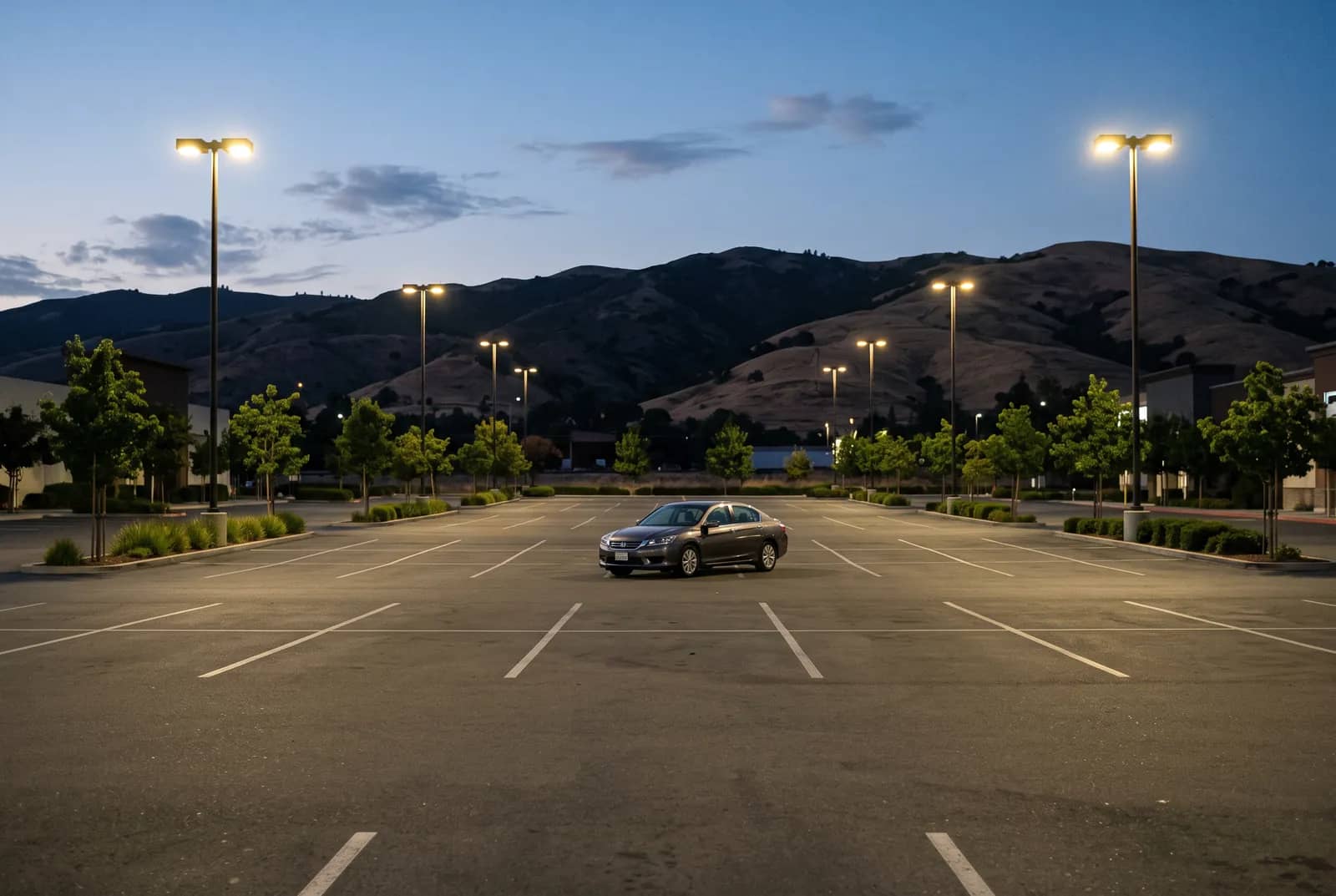
A shopping center lot is several different places with one name. A surface row out by the road, an aisle against the building, a deck with numbered levels, a service road at the back where the loading doors are. Give the nearest store entrance or the level and the row, and give the color and the plate. It saves a technician a slow circuit of a full lot with a van, which on a Saturday is ten minutes on its own.
The business park lots at McCarthy Ranch are the opposite problem: enormous, nearly empty, and nearly identical to each other. There the useful detail is the building number and which side of it you are on. Out there the calls tend to come at shift changes, when the lot has one car in it and nobody else around, which is the same pattern as the rest of this city in a different setting.
If the car is in a garage under a residential block, say so on the call, because the technician cannot get down the ramp without somebody opening the way in. That single sentence is the difference between a short visit and twenty minutes of standing at a gate. The figure does not change for an underground car, only the logistics do.
The habit that ends this, and it is one key
A second key is the whole answer, and it has to live somewhere that is not the same bag, the same coat or the same house you cannot get into. A wallet, a work drawer, a small box screwed into framing at home. A blade key with no electronics in it will at least open the door in this situation even where it cannot start the car, and it is the cheapest insurance on this page.
The other half of the habit is aimed at this city specifically. Pick the person who holds your spare by when they are free rather than by how close they live. A neighbor two doors down who leaves at seven is not a plan at eight in the morning, and a friend in Fremont is 27 minutes on a quiet map and considerably more at the hours this actually happens.
And if it happens anyway, the call is short: where the car is, what it is, whether the key is inside it or gone, and whether you have identification and paperwork for it. One number comes back with the $89 and the hour already inside it, and that is the number on the receipt.
Quick answers
The key is on the seat and the doors are locked. Can the car be opened without damage?+
Yes, in the normal case. Wedges make a few millimeters of room at the top corner of the glass and a long reach tool works the interior handle or the lock button, with the weather seal and the paint left as they were. A car lockout is $106 to $199 with the $89 service call inside the figure, quoted as one total before anyone drives.
What do I need to show before the car gets opened?+
Photo identification and the registration or insurance for the car, matched against the plate. That happens before any tool comes out, in a parking lot as much as anywhere else. If a key has to be cut and coded rather than the door simply opened, the paperwork gets checked again before the machine is switched on.
My only key is lost, not locked in. Can that be done in the lot?+
Yes, where the car stands, without a tow. A replacement key is $156 to $429 and remote programming is $94 to $199, both with the $89 inside the figure. Ask for a spare in the same session, because the second key costs a fraction of the first while the programmer is already connected and the documents are already checked.
Need it handled rather than read about?
(669) 330-0824More guides